
Supplier A
Pressure, flow, temperature, pump, burner and test basis defined.
COMPARABLEHot-water cleaning combines pressure, flow and temperature to remove contamination faster where cold water alone is inefficient. For professional buyers, the real comparison is pump duty, burner, heating coil, working temperature, accessories and serviceability — not maximum pressure.
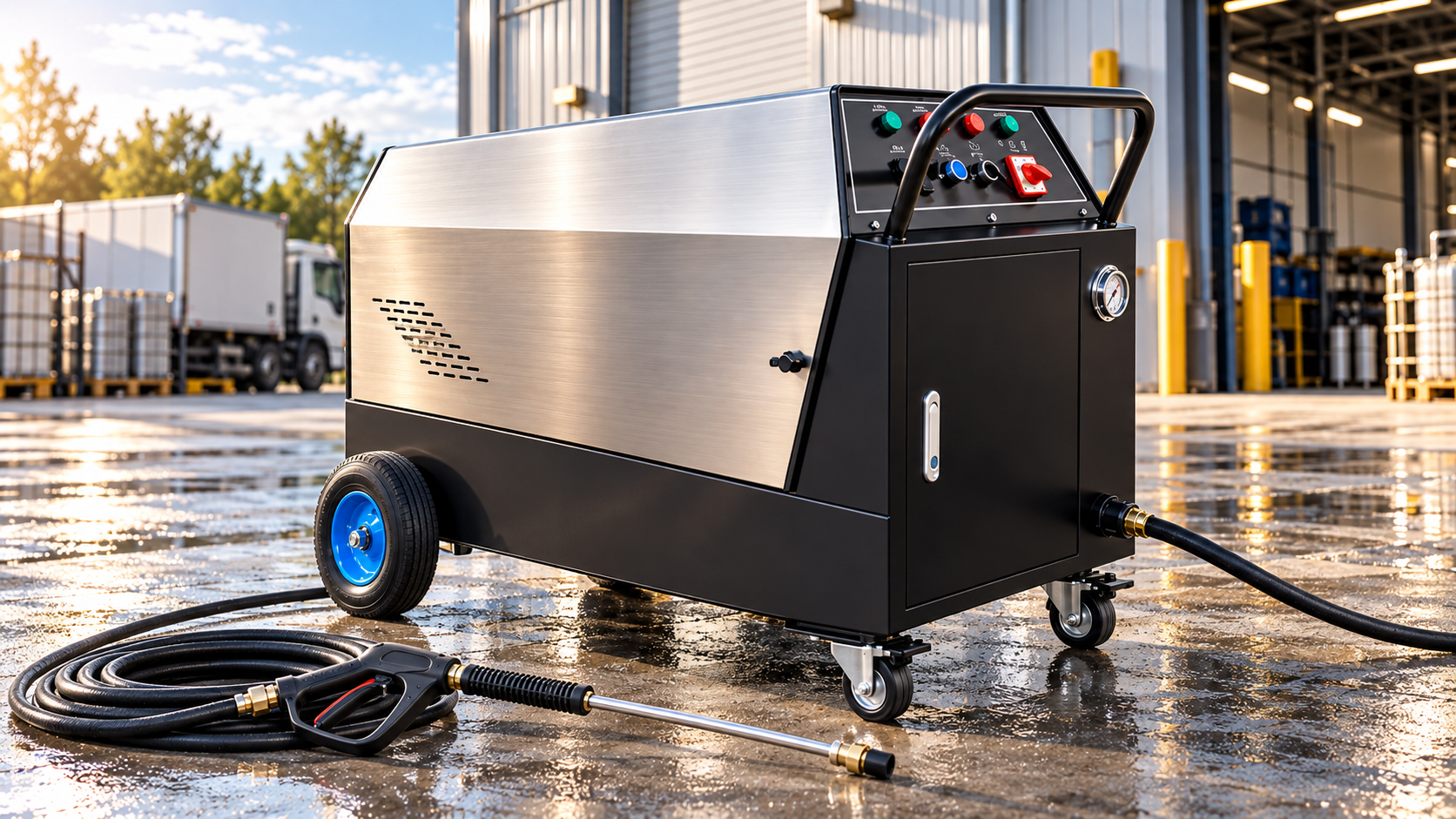
Cold water remains appropriate for mud and general washdown. Hot water earns its cost when heat shortens cleaning time, breaks down grease and reduces the amount of mechanical effort or chemical assistance required.
Best fit for mud, loose debris, construction dirt and general washdown.
Pressure + flow do most of the work.Better fit for grease, oil films, industrial residue and contamination that softens with heat.
Pressure + flow + temperature work together.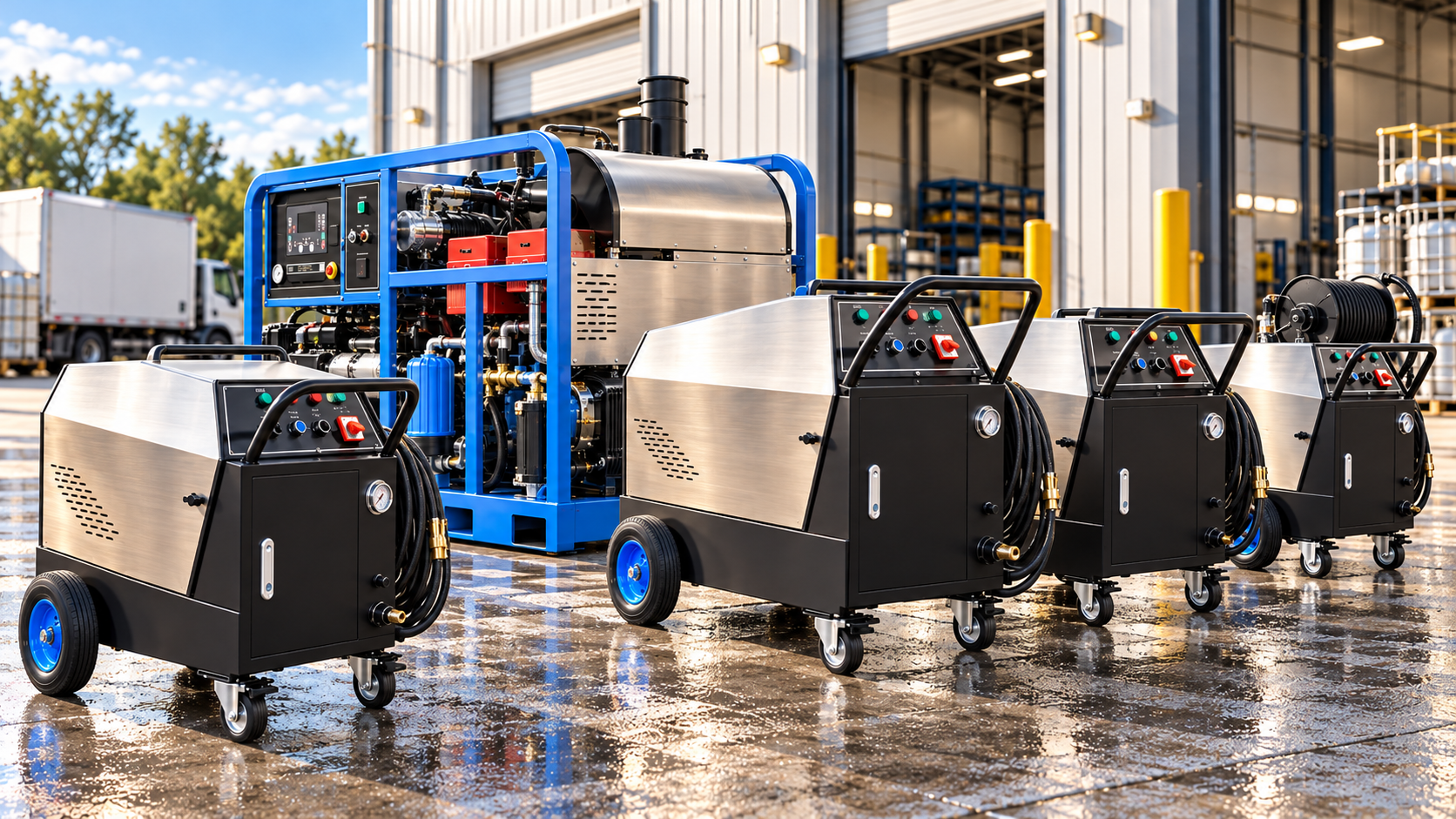
Professional hot-water systems can be compact and mobile, heavy-duty open-frame, fixed in a wash bay, or integrated into a trailer / skid package. The correct format depends on operating hours, mobility, water supply and service access.
Normalize working pressure, flow, water temperature, duty cycle, pump construction and accessory ratings before supplier price is compared.
Use rated working pressure, not only maximum pressure.
Flow removes loosened contamination and affects cleaning speed.
Important for grease, oil and heat-sensitive cleaning duty.
Intermittent vehicle cleaning is not the same as industrial continuous work.
Pump head, pistons, rpm, valves, seals and serviceability drive durability.
Hose, gun, lance, nozzle and unloader must match pressure, flow and temperature.
A hot-water washer is not simply a cold-water pump with a heater added. The pump, burner, coil, fuel system, controls, unloader and safety protections must work together under heat and pressure.
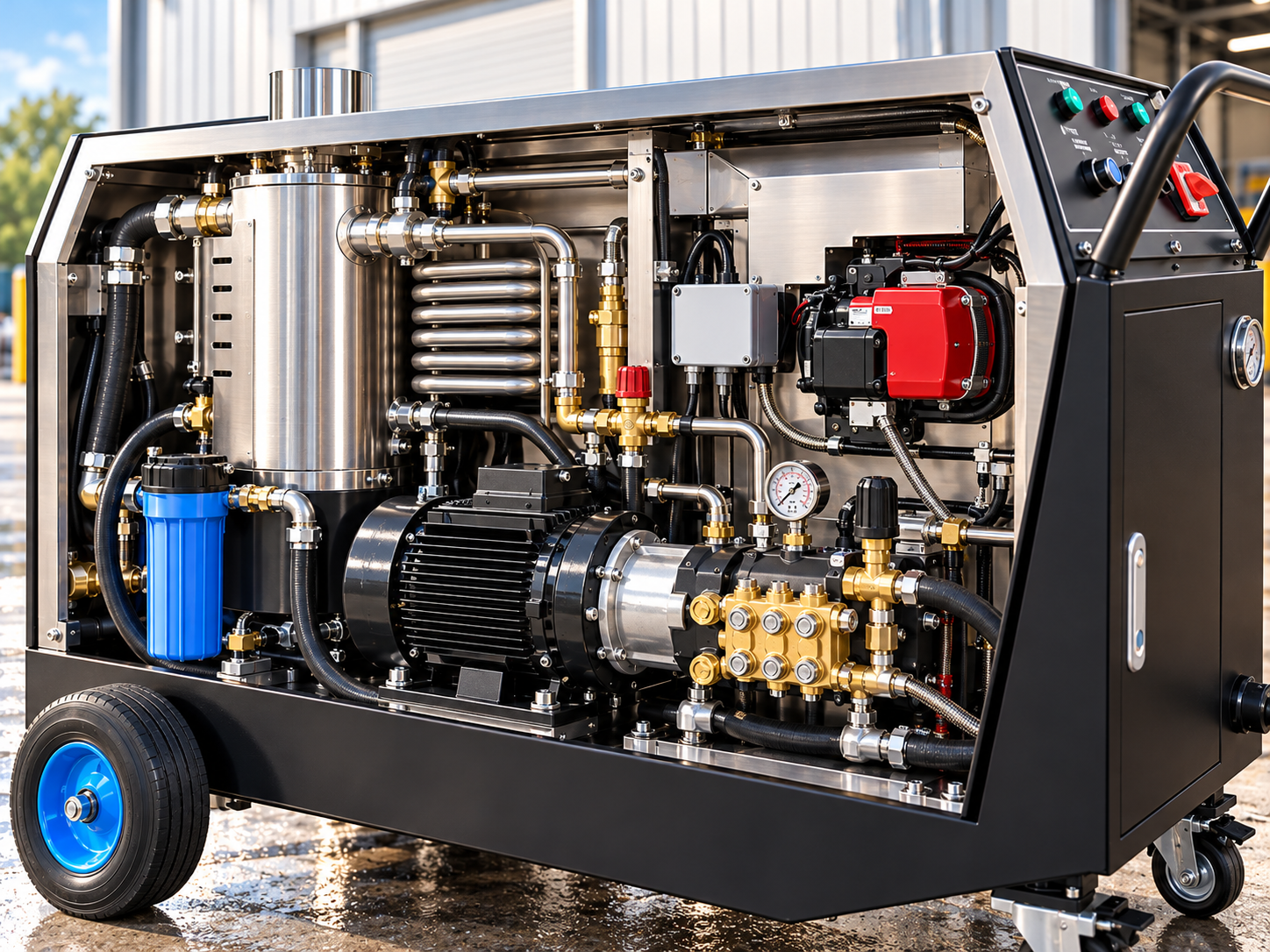
Pump seals, unloader stability, burner ignition, coil condition and hose ratings are more important to long-term ownership than a headline maximum-pressure number.
Incorrect seals, assembly or prolonged thermal / pressure stress.
Unloader, valves or pump wear can cause pressure fluctuation.
Fuel delivery, ignition or control faults stop hot-water operation.
Water quality and thermal cycling affect the heating circuit.
Pressure and temperature ratings must match actual duty.
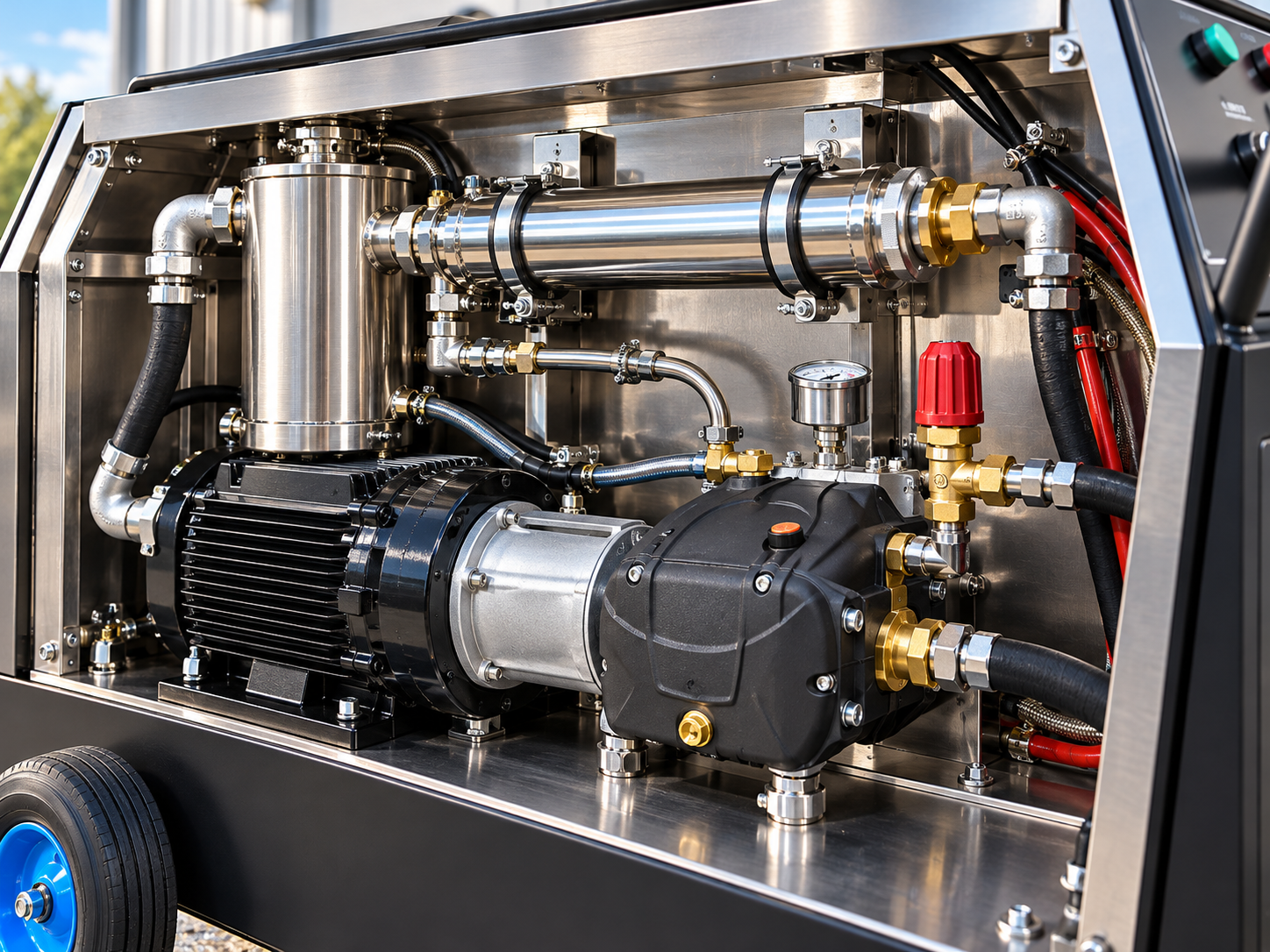
Buyers should confirm what is installed, not only what is promised in the quotation. Component model, material, rating and service access should be part of the approved basis.
A cheaper quotation may be using a lower-duty pump, simpler burner, lower temperature capability, shorter hose, lighter accessories or a less complete test basis.
Pressure, flow, temperature, pump, burner and test basis defined.
COMPARABLEHeadline data available, but hot-water system details remain open.
CLARIFYPump, burner and functional-test basis are not sufficiently defined.
NOT COMPARABLEThe complete release test should prove pressure, flow, heating, burner ignition, temperature control, leakage, unloader behavior and safety shutdowns under the agreed operating basis.
Pump · burner · coil · motor / engine · hose · gun · nozzle · labels.
Piping · fittings · wiring · heating assembly · frame · critical components.
Pressure · flow · temperature · ignition · leakage · controls · shutdowns.