
DON’T COLLECT MORE INFORMATION. FIND THE CHANGE THAT SHOULD ALTER YOUR NEXT DECISION.
China’s supplier base, product direction and cost structure move quickly. MFG research is built around one buyer question: what has changed enough to affect supplier choice, product strategy, cost, quality or timing?
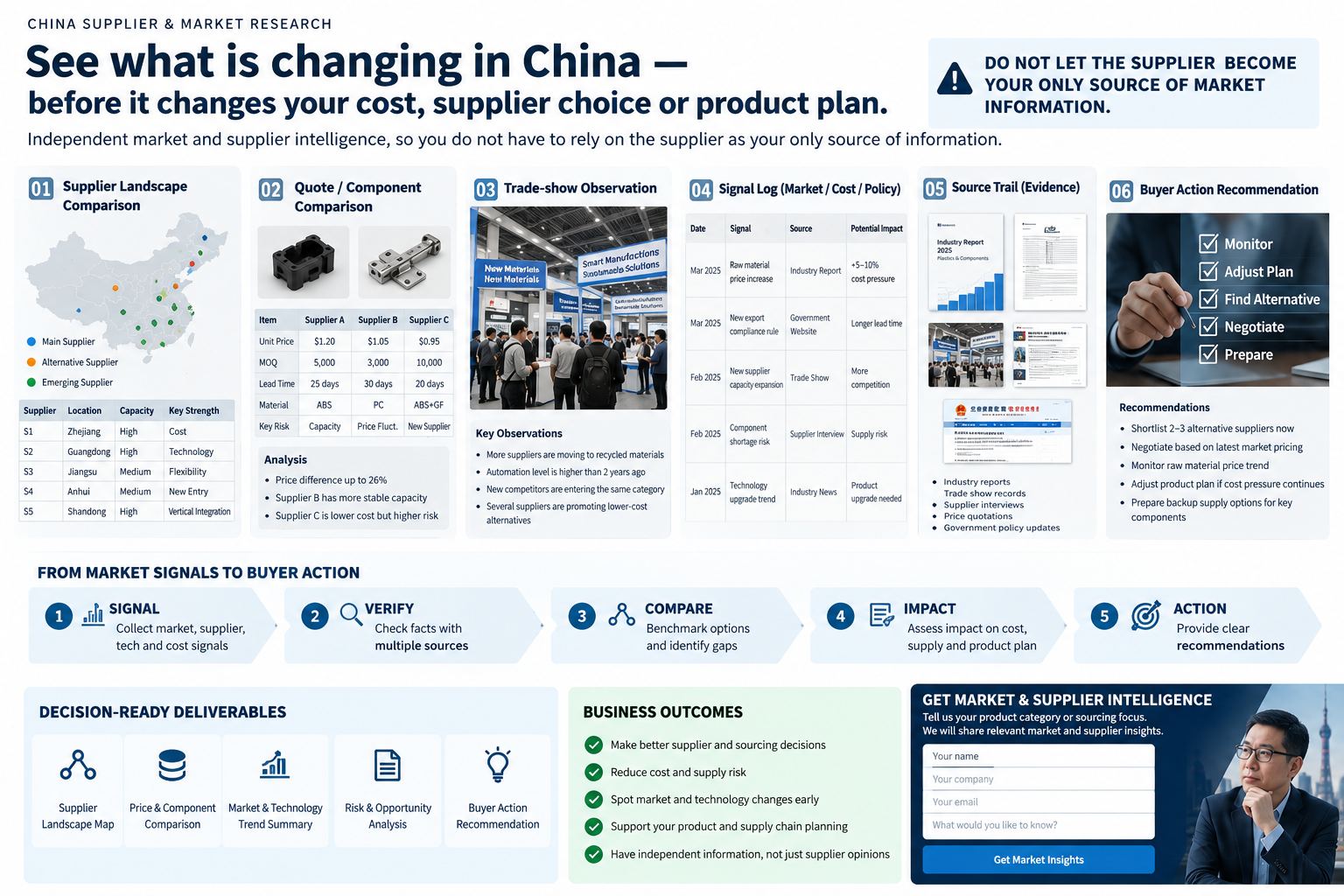
Research is useful when it answers a sourcing or product decision — not when it produces a thicker report.
Start with the decision that needs better visibility. The research scope should follow the buyer question, not a generic market template.
Alternative suppliers, capability shifts, capacity, specialization and new entrants.
New configurations, component choices, design direction and technical features.
Material, component, capacity, FX, freight or supplier-specific drivers.
Exhibitions, clusters, competitor movement, regulation and buyer demand signals.
A decision should not depend on one supplier, one exhibition or one search result.
Useful China-side research combines public information with local verification and supplier-side evidence.
Direct capability, product, quotation, process and change information.
New suppliers, product direction, category density and local industry movement.
Websites, marketplaces, public records, product listings and technical information.
Distributor feedback, product complaints, demand changes and channel observations where available.
Factory visit, sample, document check, interview or other targeted validation where needed.
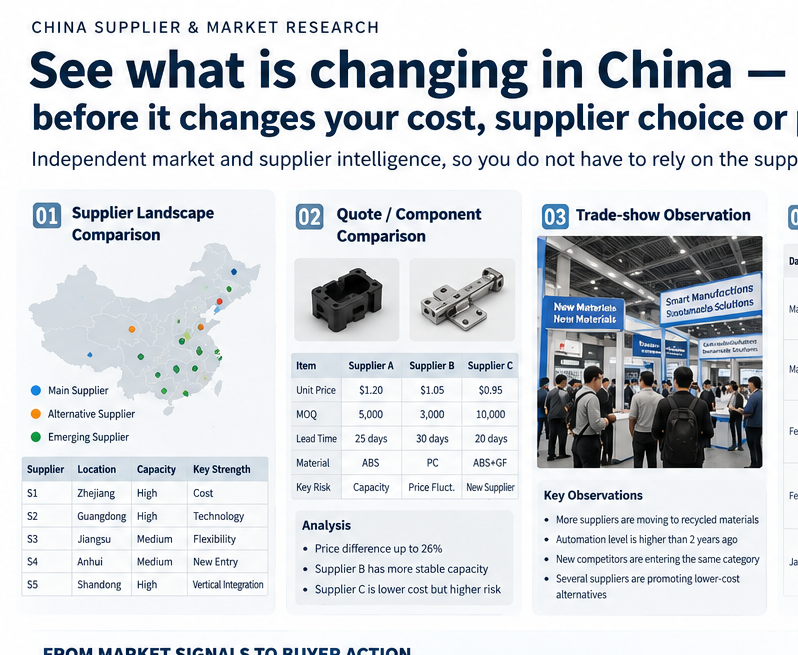
Not every signal deserves a buyer action.
Map the supplier landscape before deciding who deserves qualification.
Separate “new” from “decision-relevant.”
A new feature only matters if it changes buyer value, product risk, cost, competitiveness or market fit.
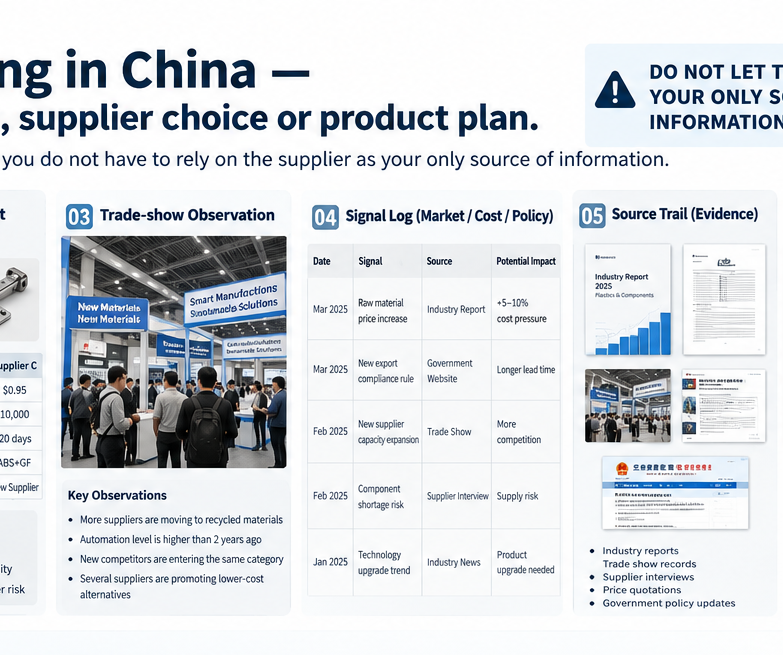
A supplier price movement is a signal to investigate — not market truth.
MFG looks for the underlying driver before recommending whether the buyer should renegotiate, re-source, wait, redesign or accept the change.
Copper, steel, aluminum, plastics, cells, electronics or other category inputs.
Supplier concentration, shortage, new capacity or technical substitution.
Capacity, labor, financing, yield, production efficiency or low-volume burden.
Demand cycle, channel inventory, new entrants or aggressive price competition.
Use exhibitions to discover change — then verify what is worth following.
An exhibition is useful because it compresses suppliers, products and category movement into one place. It is not proof by itself.
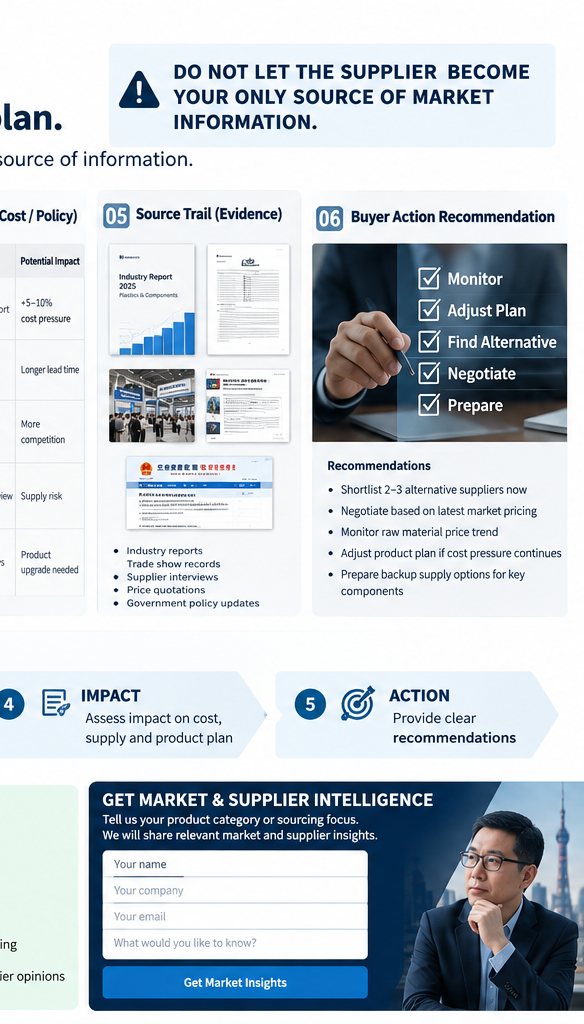
Information only matters when it changes a decision.
A decision brief, not a folder of screenshots, brochures or exhibition photos.
The decision the research is meant to support.
Where each important observation came from.
Verified Fact · Strong Signal · Hypothesis · Unknown.
Why the change matters to supplier, product, cost, quality or timing.
What should be verified, compared, qualified or changed next.