
GASOLINE GENERATORS · 1–10 kW
RUNNING WATTS ARE NOT STARTING WATTS.
PRICE IS NOT PLATFORM QUALITY.
For conventional gasoline generators, the real buying decision is starting load, output stability, alternator / copper quality, component consistency and final test discipline.
Starting LoadAVR / Voltage StabilityAlternator / CopperFinal Test
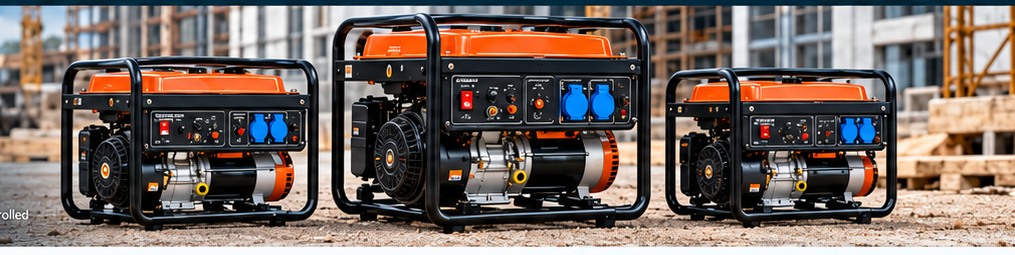
01 / APPLICATION FIT
WHEN IS A CONVENTIONAL GASOLINE GENERATOR THE RIGHT FIT?
Need lower THD, lower noise or better part-load efficiency? Compare Inverter Generators →
02 / ARCHITECTURE CHOICE
GASOLINE OR INVERTER? START WITH THE LOAD, NOT THE LABEL.
Conventional Gasoline
- Lower initial purchase cost
- Simpler architecture
- Strong fit for tools / jobsite / general loads
- Conventional alternator + AVR behavior
- Usually higher noise
Inverter
- Better THD / waveform quality
- Better for sensitive electronics
- Lower noise at variable load
- Better part-load fuel efficiency
- Stronger premium retail positioning
Neither architecture is better for every application. The load decides.
03 / THE FIRST REAL TEST
A GENERATOR THAT CARRIES 3 kW MAY STILL FAIL A 3 kW MOTOR START.
Running WattsSteady load
Starting CurrentMotor / compressor surge
Voltage DipWhat happens at start
RecoveryStability / protection
A pump, compressor or motor can demand several times its running current during start-up. Supplier comparisons need the same starting-load basis.

04 / INSIDE THE PLATFORM
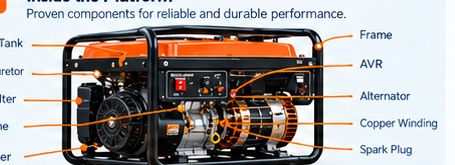
DO NOT JUDGE THE PLATFORM BY ENGINE DISPLACEMENT ALONE.
Two machines can share similar frame size, engine displacement and advertised output while using materially different internal components.
EngineAlternatorAVRStator / RotorCopper WindingCarburetorSpark PlugStarterFuel System
Approved critical components should stay visible from quotation to production.
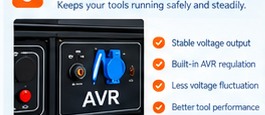
05 / AVR · ALTERNATOR · OUTPUT
AVR IS NOT A BADGE. OUTPUT BEHAVIOUR IS THE REAL QUESTION.
Load ChangeResponse under variation
Voltage RegulationStability under load
Frequency StabilityEngine / governor response
Thermal BehaviourAlternator / AVR under sustained load
Alternator + AVR + Winding + Load Behaviour
06 / CLAIMS NEED CONDITIONS
RUNTIME AND NOISE MEAN NOTHING WITHOUT TEST CONDITIONS.
Runtime
Tank size + load percentage + fuel consumption = usable runtime
Noise
Measurement distance + load condition + open/enclosed basis = comparable noise result
Distance · Load · Product Type
07 / OEM / ODM CONTROL
OEM WORKS ONLY WHEN THE APPROVED CONFIGURATION STAYS CONTROLLED.
Customization is useful only when the approved BOM survives production.
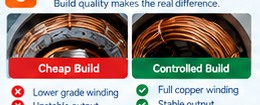
08 / SAME OUTSIDE · DIFFERENT INSIDE
TWO GENERATORS CAN LOOK THE SAME OUTSIDE AND COST VERY DIFFERENTLY AFTER SHIPMENT.
Unit price is only one part of landed warranty cost.
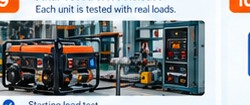
09 / FINAL TEST BEFORE RELEASE
FINAL TEST SHOULD PROVE OUTPUT, STARTING BEHAVIOUR AND SHIPMENT READINESS.
Cold / Hot StartNo-Load OutputStep LoadRated-Load RunVoltage / FrequencyStarting PerformanceLeakage / Noise / VibrationPanel / Sockets / BreakerPacking / Accessories
Test → Finding → Correction → Re-check → Release
10 / BUYER CHECKLIST
WHAT SHOULD A BUYER VERIFY IN A GASOLINE GENERATOR?
Rated / maximum / starting outputAVR / voltage stabilityAlternator / copper windingEngine / critical componentsFuel / runtime basisNoise basisOEM configurationFinal test / warranty / spare parts
Send the load type, target market and quantity.We can help verify the right gasoline-generator platform before quotation comparison.
Send Your Requirement →
RELATED BUYER DECISIONS