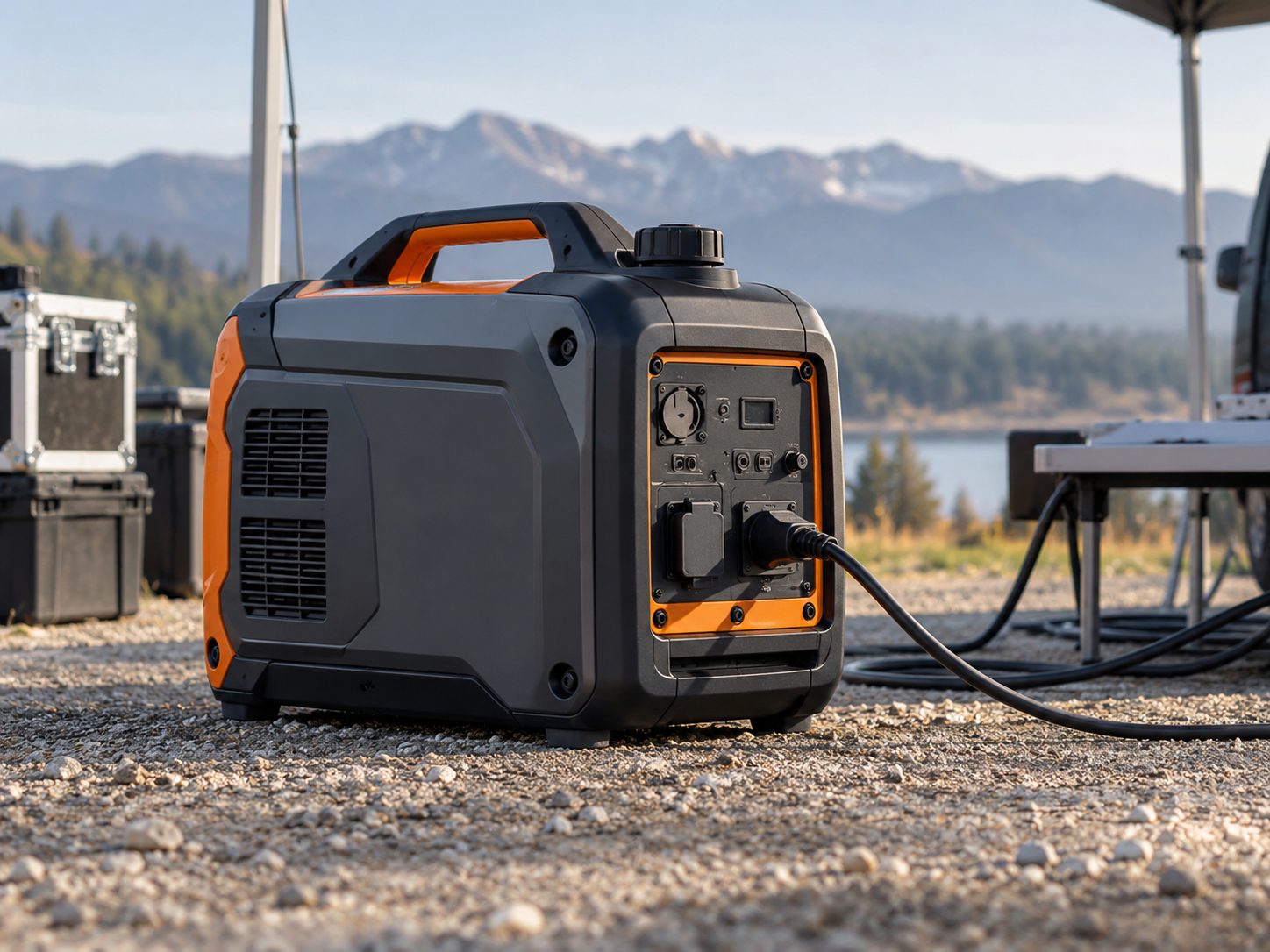
Choose the right inverter generator.Make sure production matches what you approved.
Same rated output does not mean the same power quality, thermal stability or component quality.
For importers, distributors and private-label buyers sourcing from China. Compare supplier quotations on the same basis, confirm the specification, then follow the approved version through production.
PRODUCTInverter GeneratorCHINA-SIDE ROLESpecification · Production · Verification
What is an inverter generator?An inverter generator varies engine speed with load and uses electronic power conversion to produce stable AC output. For buyers, the key question is whether supplier claims, components and production match the approved specification.
START WITH YOUR BUYING SITUATION
Different buyers need different first checks.
MFG starts from where the buyer already is — before supplier selection, during quotation comparison, or after the order is placed.
01
Import / Distribution
Define target market, application, power range and comparison criteria before shortlisting suppliers.
Follow production, check changes, verify findings and decide whether the shipment is ready to release.
PRODUCTION · QC · RE-CHECK
SUPPLIER QUOTATION COMPARISON
Same 3500W. Not the same generator.
Two quotations can show the same headline number while hiding very different output quality, internal build, testing and after-sales risk.
SUPPLIER AQUOTATION / SPEC
3500W headline claim
Rated / Peak?basis unclear
THD“Clean Power”load?
Noise58 dBdistance?
Winding“Copper”verify
InverterStandardsource?
Testing100%scope?
Warranty1 Yearsupport?
VS
BUYER LENS
Normalize the basis before choosing the supplier.
SUPPLIER BQUOTATION / SPEC
3500W headline claim
Rated / Peak?basis unclear
THD“Low THD”under load?
Noise58 dBsame setup?
Winding“Copper”same build?
InverterPremiumwhich model?
Testing100%records?
Warranty1 Yearparts?
THE PROBLEM IS NOT THE NUMBER. THE PROBLEM IS WHAT THE NUMBER HIDES.THD · winding · testing · warranty can look similar on paper and perform very differently in the field.
WHAT MATTERS BEYOND RATED POWER?
Power is only the first number. Output quality, build quality and after-sales decide the real cost.
For importers, distributors and OEM/ODM buyers, the risk is not only choosing the wrong wattage. It is approving a product that looks right on paper but creates field failures, warranty claims or distributor complaints later.
01
POWER & OUTPUT QUALITY
Rated Power — what can it sustain?Max / Peak Power — what can it start?THD / Waveform Quality — is the power clean and stable under load?
02
BUILD QUALITY
Full-Copper Winding — verify what is actually built.Inverter Module — source, thermal margin and field reliability.Control Board / Cooling — protection logic and heat management.
03
QUALITY & OWNERSHIP COST
100% Factory Testing — what is tested, recorded and re-tested?Noise — under what distance, load and operating mode?Warranty & After-Sales — who carries the cost when the problem reaches the market?
After-sales closure: Failure → Evidence → Root Cause → Correction → Production Feedback
THD / WAVEFORM QUALITY
Low THD on paper is not enough.
CLAIMWhat THD is promised?
CONDITIONAt what load and operating condition?
MEASUREMENTWhat instrument and reading?
ACCEPTANCEWhat limit is agreed?
EVIDENCEWhat record supports release?
The inverter is the reason behind the waveform. THD should be verified under relevant load conditions — not accepted as one isolated marketing number.
Electronics, cooling, controls and protection determine whether the generator remains reliable after it leaves the showroom.
INVERTER
CONTROL
AIRFLOW
PANEL
SERVICE
Different suppliers can use different internal configurations behind a similar enclosure.That difference shows up later in THD, temperature, protection behavior, noise, serviceability and warranty cost.
01
Inverter Electronics
What matters: module source · component choice · heat margin
Buyer risk: inconsistent protection and field complaints.
04
Market Panel
What matters: voltage · frequency · sockets · breaker / RCD / GFCI
Buyer risk: wrong market version, compliance or user-interface mismatch.
05
Enclosure & Service Access
What matters: noise control · vibration · access · transport protection
Buyer risk: difficult maintenance, noise complaints and transport damage.
Similar outside. Different inside. Different field result.This is why MFG verifies the approved internal configuration — not only the model name and appearance.
MARKET REQUIREMENTS
One generator. Different market requirements.
A different destination market can change voltage, frequency, sockets, protection, labels, safety functions and compliance requirements. These details should be confirmed before production.
Branding & After-SalesManual · packaging · spare parts · accessories · warranty position
ComplianceDestination-market electrical, emissions, safety and labeling requirements
230V 50Hz
CO SENSORPARALLELECOUSB / DCRCD / GFCI
SAMPLE ≠ PRODUCTION
The sample is the reference. The BOM is what must stay controlled.
Inverter generators can look identical while critical electronics, winding, breaker, cooling or firmware change underneath. Approval should freeze the configuration — not only the appearance.
Customization is only useful when the approved configuration stays controlled.
For private-label buyers, the risk is not only logo or color drift. Electronics, winding, protection, market settings and after-sales parts can change the product customers actually receive.
Destination market requirements should be frozen before production, not corrected after packing.
Electrical voltage · Hz · sockets · breaker · RCD/GFCI · CO shutdownBranding panel · labels · model · manual · carton · accessories
04 · LIFECYCLE
Spares + Serviceability + Warranty
The approved product should remain supportable after it reaches the distributor and end user.
Support spare parts · service parts · exploded views · part numbersDelivery packaging · accessories · warranty basis · service documentation
MFG RULE
Critical electronics and BOM changes should not happen silently after sample approval.The buyer should know what changed, why it changed, what risk it creates and what must be re-tested.
“100% tested” is only meaningful when the test basis is defined.
For an inverter generator, buyer-side verification should connect the approved claim to test conditions, readings, acceptance criteria and evidence — then close any finding before release.
FACTORY CLAIM
100% TESTED
Useful only when the scope, load, duration, readings and failure handling are known.
≠
BUYER-SIDE QUESTION
Tested how?
PERFORMANCERated output · Surge · Voltage / Frequency