A useful trade show visit is measured by supplier decisions—not the number of brochures you collect.
bauma CHINA brings manufacturers, brands, component suppliers and service providers together in Shanghai. For an overseas importer, equipment dealer, rental company or project buyer, the opportunity is to compare more suppliers in a short period. The risk is to mistake an impressive display for evidence that the manufacturer can deliver your actual order.
This guide explains how to plan your visit, find relevant products, qualify suppliers, compare what you are offered and arrange factory checks after the show. MFG POWER focuses on generators, site-power equipment and selected related construction equipment, working on the buyer's side, not as the factory's sales department.
1. Before the show: define what you actually need to buy
Do not begin with a list of exhibitors. Begin with the decision you want to make. For every product category, write down:
- Application: rental fleet, site standby, mine, roadworks, industrial customer, dealer stock or OEM brand.
- Duty: prime versus standby power; continuous load profile; pressure and air delivery for compressors; flow and head for pumps; operating hours for lighting towers.
- Destination market: voltage/frequency, ambient temperature, noise limits, emissions and safety rules where applicable. Check current national and product-specific requirements; a generic CE or UKCA claim is not proof of conformity.
- Commercial basis: target quantity, trial order, Incoterms, spare-parts expectations, warranty workflow and lead time.
- Deal breakers: unacceptable component substitution, no meaningful testing, unverified manufacturer identity, no service parts or no traceable corrective action.
Buyer task: prepare a one-page requirement brief that can be sent to shortlisted exhibitors before you arrive. This often saves more time than a longer visit schedule.
2. Find the right products without walking every hall
Use the official bauma CHINA exhibitor directory and product directory. Search both product terms and supplier names. Product listings are useful leads, not independent verification of claims.
| Search first for | What to compare | Where MFG POWER can help |
|---|---|---|
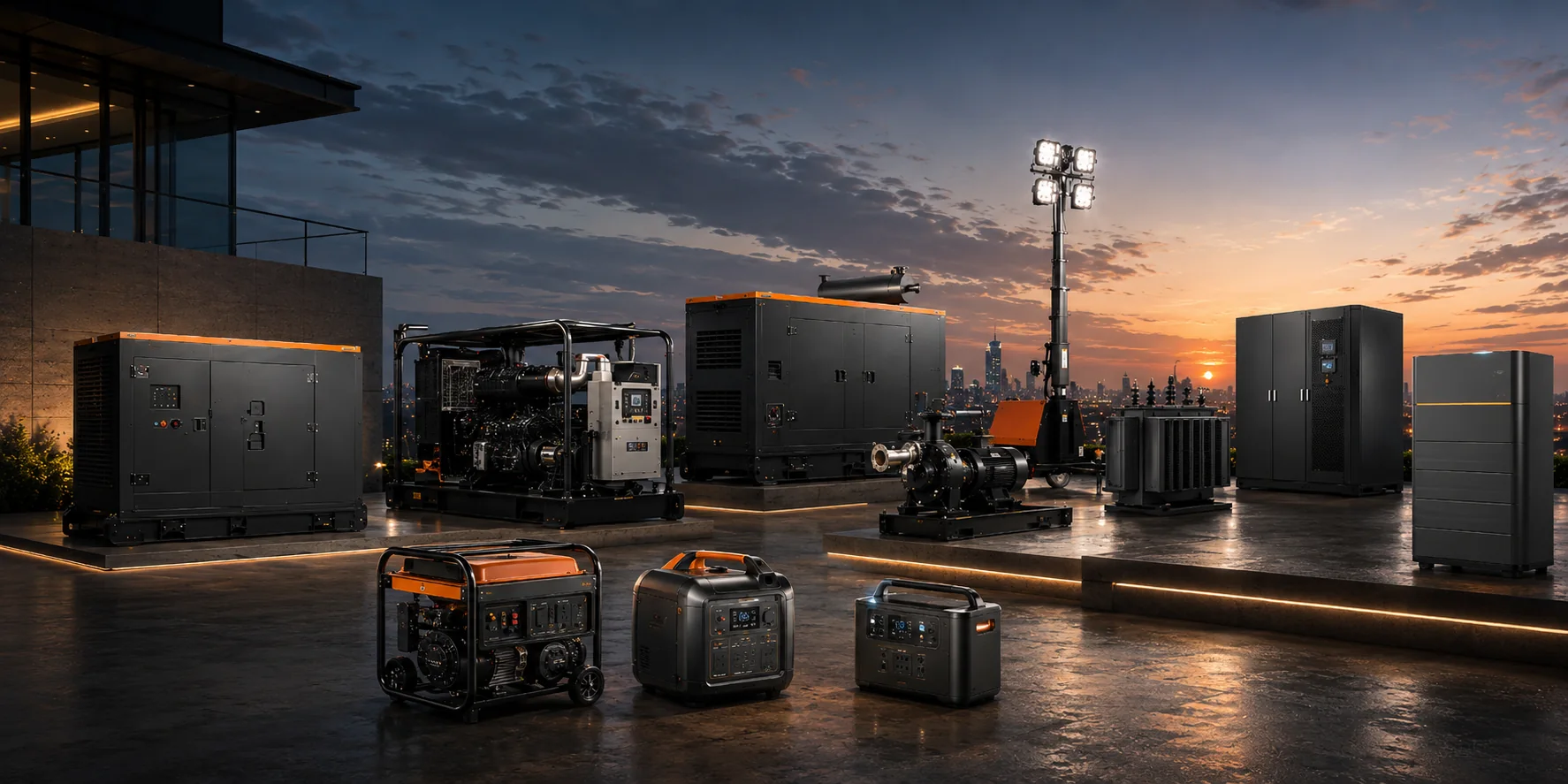
| Diesel / gas generators | Actual rating basis, engine, alternator, controller, test conditions | Specification and factory review |
| Inverter / portable generators | Rated/peak output, waveform quality, noise, temperature rise | Like-for-like comparison, sample checks |
| Lighting towers | Light coverage, mast and stabilizers, runtime, battery/solar options | Site-duty comparison and supplier checks |
| Mobile diesel air compressors | Free air delivery, operating pressure, compressor air end, engine, aftercooler | Technical request list and sourcing assessment |
| Industrial water pumps | Flow at head, duty point, seal/material, solids handling | Application/specification check |
| Portable and hybrid site power | kW versus kWh, usable energy, charge sources, controls, protection | System comparison and acceptance scope |
| Compact machinery | Service network, hydraulics, engine/e-drive, spares, local compliance | Preliminary feasibility and supplier screening |
Two-venue note for 2026: the Shanghai World Expo Exhibition & Convention Center (Nov 23–26) and Shanghai New International Expo Centre (Nov 24–27) have different opening periods. Recheck official hours and travel arrangements before committing to meetings. This information belongs to the 2026 edition and should not be reused as a future edition's schedule.
3. How to spend 15 minutes at a supplier booth
Ask for evidence, not only price. A short, disciplined conversation can eliminate unsuitable candidates:
- Who makes the unit? Ask for the manufacturing company, factory address, and whether the displayed model is made in-house, outsourced or sourced from another facility.
- Which configuration is being quoted? Record engine, alternator, controller, compressor air end, battery cells or key hydraulic components as applicable.
- What is standard, and what is optional? Obtain a written specification and clarify the basis of the displayed unit.
- How is output verified? Ask which tests are performed, at what load and ambient conditions, and whether records are available for the exact model.
- What changes between sample and production? Ask for BOM revision control and approval of component changes.
- How are warranty claims handled? Ask about spare parts, response process, field failures and corrective actions.
Supplier decision: mark each booth shortlist, evidence needed or not suitable. A fast decision log is more useful than an unstructured stack of catalogs.
4. Do not compare quotation totals until the technical basis matches
Two suppliers can quote the same rated kW but different operating conditions, engines, alternators, cooling systems, controllers, noise performance and test scope. Similarly, two air compressors with similar engine power may have different usable air delivery at rated pressure.
Ask each shortlisted supplier to quote against the same requirement sheet. Record product configuration, excluded items, testing and acceptance criteria, spare parts, warranty responsibilities, packing, Incoterms and payment milestones. Where information is missing, mark it open rather than assuming it is included.
For generator buyers, also read How to Choose Power Equipment, Generator Quotation Comparison and Generator Inspection Checklist.
5. What a factory visit can—and cannot—prove
A factory visit can help you assess whether the manufacturer has the people, production flow, equipment, component traceability and quality process relevant to your order. It should include production areas, inspection points, test facilities and spare-parts arrangements wherever access is agreed.
But a single visit does not certify the whole factory, prove every future shipment is conforming or replace product-specific testing. You still need written acceptance criteria, evidence tied to your production batch and a follow-through plan.
Use the following exit checklist:
- Legal entity and manufacturing site identified
- Planned production and critical subcontracting explained
- Relevant test capability demonstrated or independently arranged
- Quoted BOM and substitutions documented
- Open technical questions assigned to named contacts
- Next step, responsible person and target date recorded
6. Do you need an independent China procurement office?
If your company already has an experienced local engineering, purchasing and QC team, you may only need occasional specialist support. If you have several suppliers, no local staff, repeated quality issues, a first trial order, or a short Shanghai visit, independent China-side support can be more useful than another translator or generic tour guide.
The key question is not “Can someone take me to the factory?” It is “Who will challenge supplier claims, verify what changed and follow the open issues after I fly home?”
MFG POWER can assist with a scoped assignment: shortlist and check relevant suppliers, prepare a technical visit agenda, coordinate availability, record findings and help follow agreed corrective actions. We work for the buyer, with no supplier commission. Factory access, testing and travel arrangements remain subject to confirmation.
7. Turn the trip into a next-step procurement plan
Before leaving Shanghai, reduce each shortlisted supplier to one page: opportunity, technical fit, evidence reviewed, open risks, indicative commercial basis, required test or visit, action owner and deadline. A supplier is not approved simply because the meeting went well.
Need a focused supplier meeting or factory visit plan? Discuss your equipment and Shanghai dates with MFG POWER. Include the product, target market, supplier/quotation status and your available dates. Or request a buyer-side review through the China Office service.
Editorial note: Independent buyer guide; not affiliated with or endorsed by the bauma CHINA organizer. The 2026 two-venue dates above refer only to that edition. Verify future event details with the organizer.