What is the real risk?
When the purchase order is signed, can you still tell which components are going into your equipment, when the factory will test it and whether any changes have been approved? Those are the questions to settle before shipping.
A Competitive Price Does Not Always Mean a Competitive Purchase
Put two 250 kVA generator quotations side by side. The ratings may match. Check the engine model, alternator, cooling capacity and test conditions before comparing prices.
A lower price can be perfectly legitimate: a factory may have better purchasing terms or a more efficient production line. But the quotation may also leave out something you expect to receive.
Ask both suppliers to price the same agreed specification, including accessories, test requirements and spare parts. Record exclusions and deviations alongside the price rather than discovering them after the order.
A different component is not automatically an inferior one. The buyer needs enough information to approve the alternative on its merits.
Compare more than the price. Know exactly what you are buying.
Discuss your generator quotation → · Quotation comparison guide
Eleven Procurement Risks That Overseas Buyers Should Understand
Unapproved Component Substitution
Suppose the approved generator uses one controller model and the factory proposes another because stock is unavailable. Will the replacement work with your existing ATS and service software?
The answer may be yes, but a substitution needs technical review and written approval before installation.
Record the critical parts in the approved bill of materials (BOM), including model numbers and permitted alternatives. Check the actual production units against that record.
Specification Deviations
Do not write only “250 kVA, 50 Hz” on the purchase order. Include the duty rating, site temperature, voltage, enclosure requirements and the acceptance tests relevant to the application.
A cooling arrangement suitable for a temperate climate may need changes for a hot site.
For storage equipment, identify the battery and inverter combination as well as the intended operating environment and grid requirements.
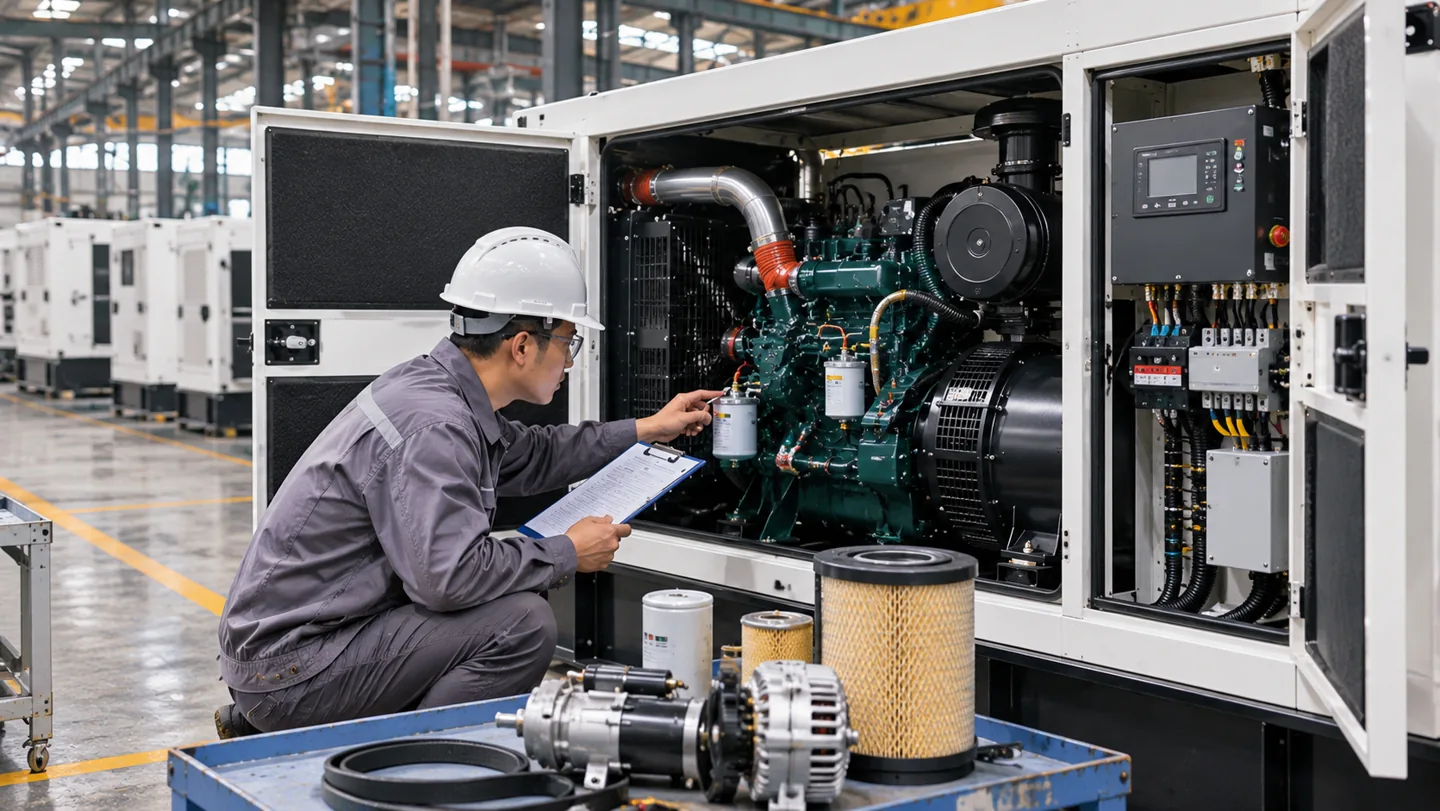
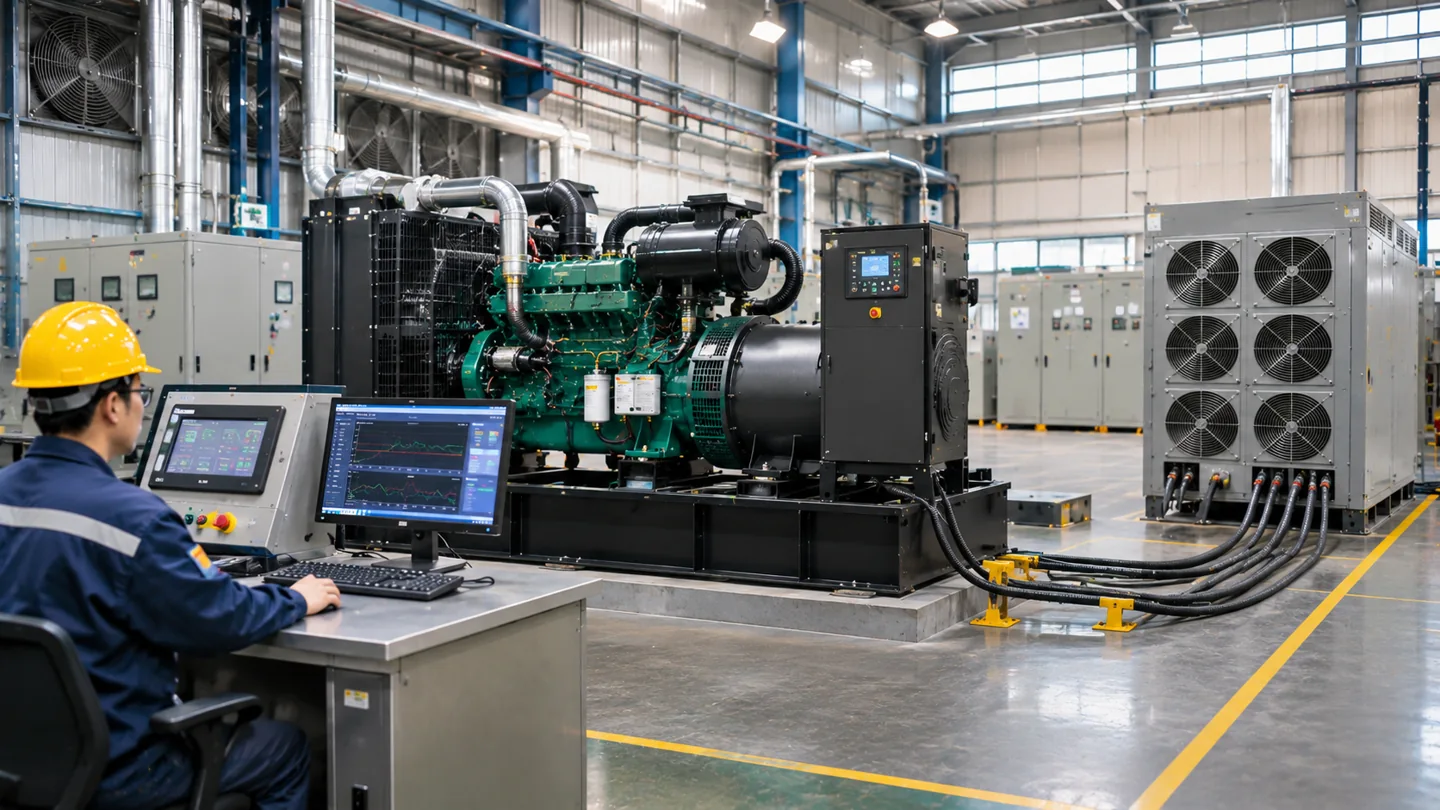
Your specifications. Our verification.
Compare approved component models, technical requirements and production configuration before release.
Differences Between Samples and Mass Production
One approved sample tells you what one machine can do. A repeat order needs the same scrutiny, especially after a supplier changes a component, subcontractor or production process.
Keep the approved sample configuration on record. Check incoming critical parts and selected production units against it; agree the sampling plan and any changes with the buyer.
Defects Discovered After Arrival
Imagine discovering a cooling problem after a generator has been delivered to a customer's site.
The freight, clearance and installation bills have already been paid.
Sending a heavy machine back may make little commercial sense. Local repair, replacement parts and compensation can erase the saving on the original quotation. That is why the agreed acceptance test matters.
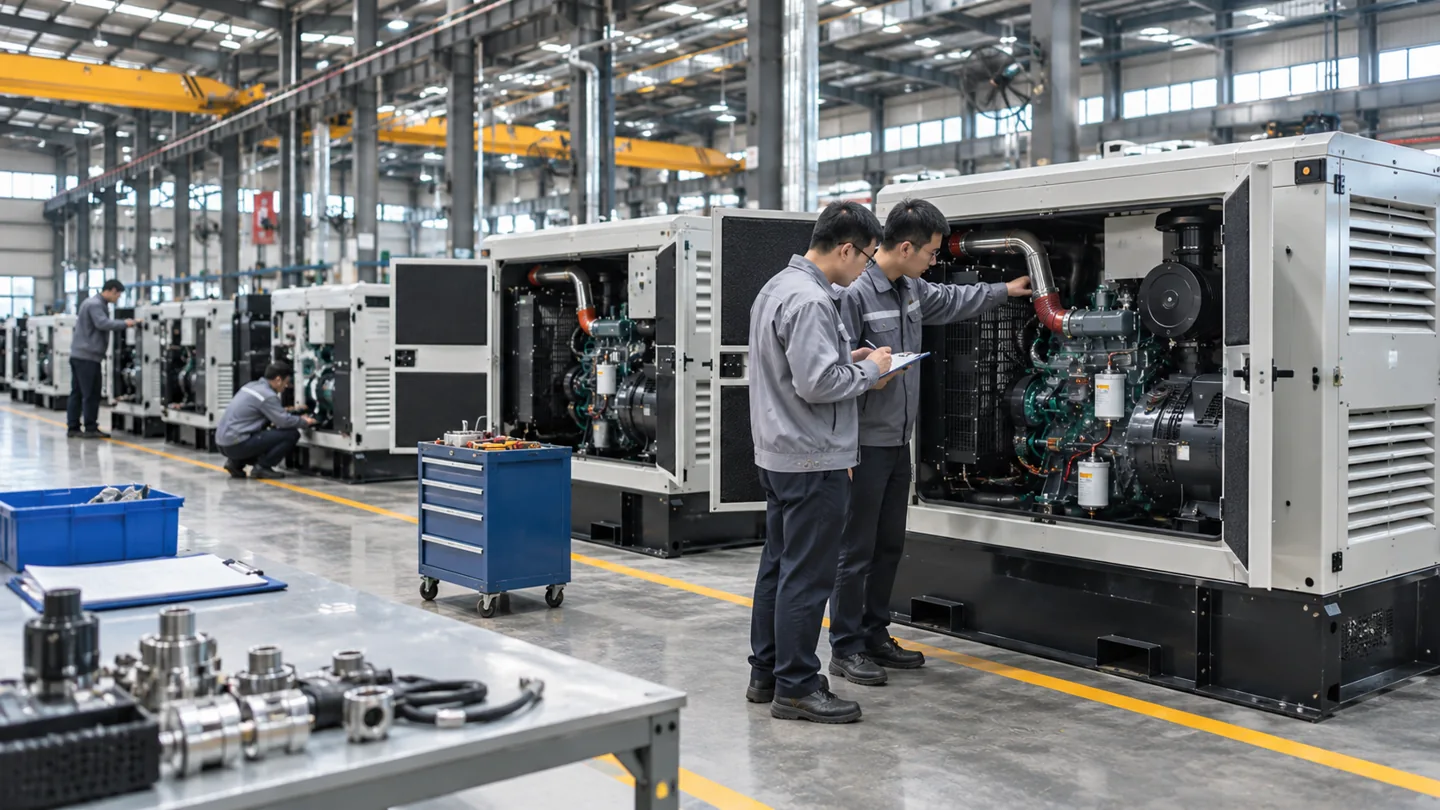
An approved sample is not a substitute for production control.
Check that critical configurations and agreed changes remain consistent throughout the batch.
Supplier Financial Difficulties or Business Failure
An established supplier can still run into financial or production difficulties.
Repeated delays, unexpected advance-payment requests or a new bank account deserve attention. Independently confirm payment changes through a trusted contact.
None of these signs proves insolvency.
Check the factory's current operating status and order progress; consider a qualified second source before supply is interrupted.
Delivery Delays
Your supplier quotes 45 days. Has the engine arrived? Has the alternator been ordered? Is a final test slot available?
Ask for dated milestones covering critical components, assembly and testing, not just the intended shipping date.
Missing a distributor's selling season or a contractor's installation window can be more expensive than paying for a faster production slot.
Difficult Warranty Claims
Who pays for the replacement controller, the technician's time and the freight when a machine fails overseas? A warranty period alone does not answer those questions.
Agree what failure evidence the factory needs, how it will investigate claims and how repair costs will be allocated.
Set those terms before placing the first order.
Recurring Quality Problems
Replacing a failed AVR may close one warranty claim. It does not tell you why the AVR failed.
Ask whether the failure involved the regulator itself, its operating conditions or another part of the system. The actual cause must be established through investigation.
Require a corrective-action record and evidence that the next production units have been checked.
Do not let the same problem reach your customer twice.
Unreliable Spare Parts Availability
If a distributor cannot obtain a replacement inverter board, a repairable generator can become an expensive replacement claim.
The same applies to UPS modules and controllers that change between production revisions.
Ask for parts numbers, revision compatibility, expected availability and an agreed initial spares list.
Regulatory and Product Compliance Risks
Start with the country of sale and the intended application. A certificate for a different generator model is not enough.
Match the model and configuration on the applicable declarations, reports and certificates to the equipment on order.
Engine emissions, noise and electrical safety may matter for a generator; electrical safety and electromagnetic compatibility requirements may differ for a UPS or storage system. Confirm the applicable obligations with qualified compliance specialists.
Intellectual Property and Confidentiality Risks
A private-label order can involve your drawings, enclosure design, tooling or control software.
Decide who may access those materials, which subcontractors may use them and who owns the tooling.
Have appropriate legal counsel address confidentiality, design ownership and permitted use of brand assets before development starts.
Not sure what you are really paying for?
Share your equipment type, destination market and buying stage. We can discuss the technical and commercial checks that matter before you commit.
What These Risks Look Like in the Power Equipment Industry
These are illustrative procurement scenarios, not documented customer cases.
Diesel Generators
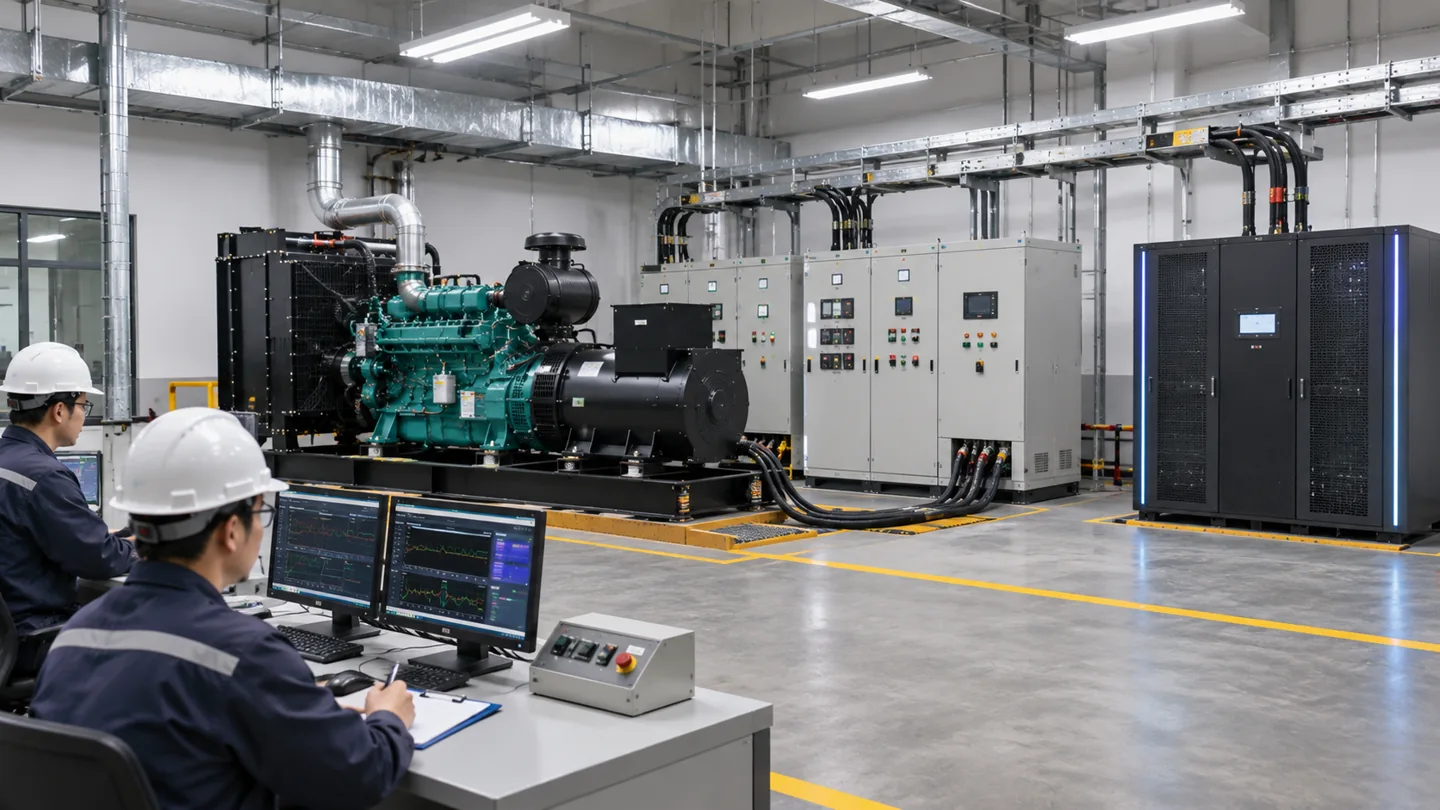
A distributor orders generator sets for operation in a hot climate. The nominal kVA rating is correct, but the cooling system has not been evaluated against the intended ambient temperature and sustained load.
The units may pass a short factory test yet experience overheating or power limitations under demanding site conditions.
The procurement solution is to define operating conditions, verify the cooling configuration and establish an appropriate load-test procedure before shipment.
Inverter Generators
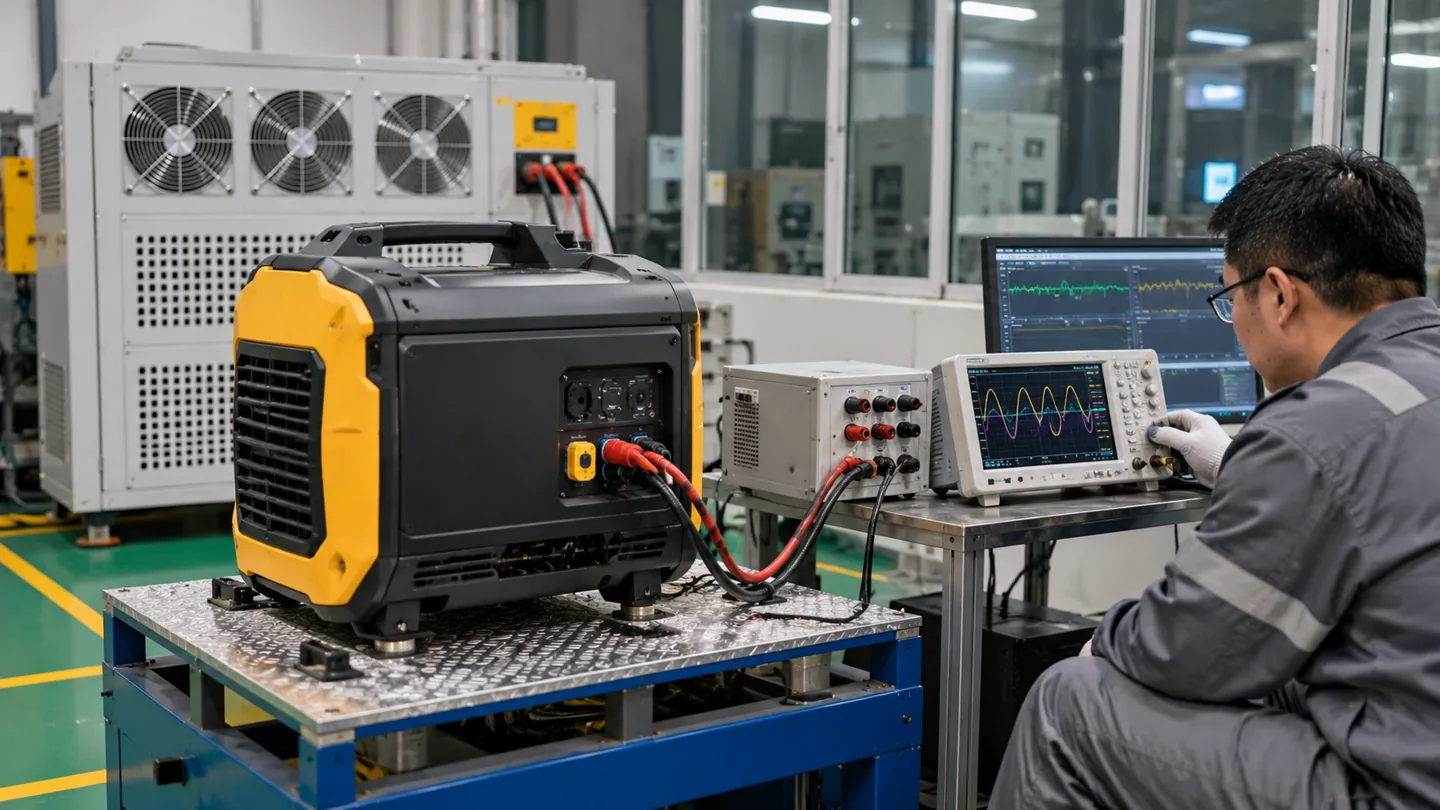
A buyer approves a portable inverter generator based on its rated output and appearance.
During production, changes to the inverter module or engine configuration could affect waveform quality, transient response, noise or fuel consumption.
Production verification should therefore cover electrical performance as well as physical appearance.
UPS and Switchgear
A project buyer purchases a UPS, an automatic transfer switch and distribution panels from separate suppliers.
Each product may satisfy its individual specification, but system compatibility issues can arise from charging current, protection coordination, input frequency tolerance or switching arrangements.
Coordinated technical review is necessary before the equipment is manufactured and shipped.
Transformers
Two transformer quotations may specify the same rated capacity and voltage ratio while offering different guaranteed losses, impedance, insulation characteristics and temperature-rise performance.
These differences can affect operating costs, installation requirements and compatibility with the wider electrical system.
The buyer should compare the complete technical schedules and applicable test requirements rather than capacity and price alone.
Energy Storage and Hybrid Inverters
A battery system and hybrid inverter may appear compatible based on their voltage and power ratings.
However, communication protocols, BMS compatibility, charging limits, firmware versions and protection settings may differ.
The complete system configuration should be reviewed, and appropriate integration tests should be agreed before shipment.
Construction Machinery Spare Parts
A replacement part may fit the original equipment but have different material properties or manufacturing tolerances.
The result may be premature wear, equipment downtime or damage to associated components.
Dimensional verification, material requirements, traceability and appropriate inspection criteria are essential when purchasing critical replacement parts.
Generator controls: check the interfaces, not just the controller brand.
Before ordering, ask for the approved controller model and firmware, the intended ATS or synchronising arrangement, communication interfaces and the agreed protection functions. A controller that fits the panel is not necessarily a suitable replacement. For a multi-supplier system, have qualified engineers review the interface and protection requirements, then agree the functional tests with the manufacturers.
Explore engineering review · Discuss your technical specifications →
BUYER CHECK · LOAD TESTING
A 100% kW test is not always a 100% kVA test.
For example, a 250 kVA generator rated at 0.8 power factor corresponds to 200 kW. A 200 kW resistive load test at unity power factor checks active-power capability, but does not reproduce the rated 250 kVA condition. Where required, agree a suitable resistive/reactive test and power factor with the manufacturer and qualified test team.
Request: model and serial number, duty rating, load steps and duration, power factor, ambient conditions, voltage and frequency results, temperature readings and disposition of deviations. Acceptance limits must come from the agreed specification and applicable requirements.
Technical reference: Avtron Power Solutions — resistive and reactive load banks. Related guide: Generator load bank testing.
The Real Cost of a Procurement Failure
For a distributor, the useful comparison is the margin left after freight, testing, service and warranty costs.
Landed cost covers the equipment and applicable freight, customs, insurance and delivery charges to the agreed destination. Lifecycle cost also considers fuel, maintenance, replacement parts and downtime over the intended service life. Keep these separate when comparing offers; use the same duty and operating assumptions.
Include these items when evaluating the offer:
| Cost category | Potential impact |
|---|---|
| Equipment purchase | Initial supplier invoice |
| Freight and import costs | Shipping, customs and local transport |
| Inspection and testing | Verification before delivery |
| Rework and replacement | Repair labour and replacement components |
| Warranty obligations | Claims from distributors and end users |
| Operational downtime | Interrupted projects or customer operations |
| Lost sales | Delayed deliveries and reduced product availability |
| Reputation | Reduced customer confidence and repeat business |
A repeat defect can turn a profitable product range into a service burden. It can also cost you a customer's next order.
How to Control Procurement Risks at Every Stage
Use the following checkpoints to decide what you need from your supplier and what needs independent verification.
Before Production: Establish What You Are Buying
- Verify the supplier's legal identity, manufacturing capabilities and relevant experience.
- Determine whether production is performed internally or subcontracted.
- Compare quotations against a consistent technical specification.
- Establish an approved BOM and critical component list.
- Define operating conditions, performance requirements and acceptance criteria.
- Agree on production schedules, warranty responsibilities and spare parts arrangements.
- Establish a written engineering change approval procedure.
During Production: Maintain Control Over What Is Being Built
- Monitor production progress against agreed milestones.
- Verify critical materials and components.
- Review manufacturing processes where appropriate.
- Check that production follows approved drawings and specifications.
- Investigate deviations before additional units are affected.
- Record supplier corrective actions and verify their implementation.
Before Shipment: Verify What You Are Receiving
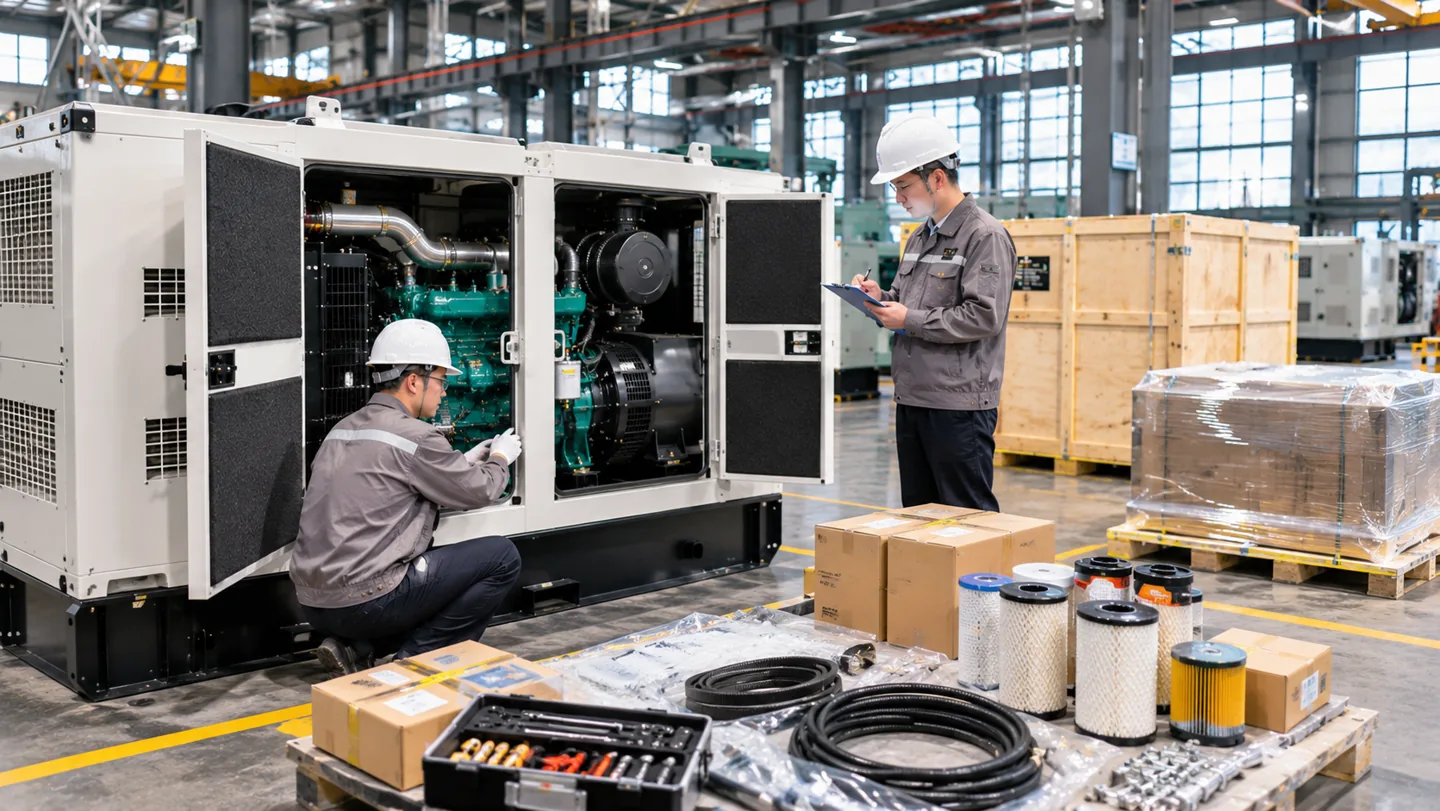
- Conduct appropriate pre-shipment inspections.
- Witness agreed factory acceptance tests, or FAT.
- Verify serial numbers, nameplates and product configurations.
- Review electrical, mechanical and functional test results.
- Check accessories, spare parts, packaging and shipping documents.
- Confirm that unresolved nonconformities are addressed or formally accepted by the buyer.
Inspection should be based on the agreed technical requirements, rather than a generic checklist alone.
After Delivery: Protect the Next Order
- Collect commissioning and field-performance feedback.
- Document warranty claims and failure evidence.
- Coordinate technical investigations with the supplier.
- Establish corrective and preventive actions where required.
- Verify improvements in subsequent production.
- Maintain spare parts and product configuration records.
Three Ways to Manage Procurement in China
Overseas buyers generally have three practical options: manage suppliers remotely, establish their own China office or engage an independent local procurement partner.
| Consideration | Remote procurement | Own China office | Independent China procurement partner |
|---|---|---|---|
| Fixed operating costs | Generally low | Generally high | Depends on service scope |
| Local presence | Limited or occasional | Dedicated local presence | Agreed local coverage |
| Technical oversight | Depends on buyer and supplier resources | Depends on recruited expertise | Depends on partner expertise |
| Supplier evaluation | Remote or outsourced | Managed internally | Managed within agreed scope |
| Production monitoring | Supplier reports and external inspections | Direct internal management | Coordinated local monitoring |
| Management control | Direct but remote | Direct and internal | Shared through defined responsibilities |
| Scalability | Limited by internal resources | Requires recruitment and management | Can be adjusted by agreement |
| Suitable for | Standardised, established purchases | Sustained purchasing volumes and complex operations | Buyers requiring local capability without a full internal office |
Remote procurement can work effectively when products are well standardised, suppliers are established and the buyer has strong technical and contractual controls.
A dedicated China office can provide greater direct control, but it also requires recruitment, management, operating expenditure and sufficient purchasing activity to justify the investment.
An independent procurement partner offers another option for buyers that need local support without establishing a complete internal organisation.
Choose the arrangement that fits your order volume, technical risks and available staff.
How MFG POWER Supports Overseas Buyers
MFG POWER acts as an independent China procurement office for global power equipment buyers.
With approximately two decades of power equipment industry experience, our approach combines supplier development, technical procurement, quality verification and China-side coordination.
Supplier Sourcing and Evaluation
Identify suitable manufacturers, compare their capabilities and evaluate potential suppliers against commercial and technical requirements.
Quality Protection
Coordinate inspections, review agreed specifications, monitor critical production requirements and support the resolution of identified nonconformities.
Product Improvement
Work with buyers and suppliers to investigate recurring problems, evaluate alternative components and improve product configurations where appropriate.
China Representative Office Services
Provide ongoing local coordination across suppliers, production schedules, technical communication, order follow-up and after-sales matters within an agreed service scope.
Market Intelligence
Help buyers understand manufacturing capabilities, emerging products, alternative suppliers and relevant developments in China's power equipment supply chain.
MFG POWER's role does not replace the manufacturer's contractual responsibilities or the buyer's final technical and commercial approval.
When Should You Consider Local Procurement Support?
Local support may be particularly valuable if:
- You are purchasing power equipment from China for the first time.
- You are developing a private-label or customised product range.
- You are managing several manufacturers simultaneously.
- You have experienced repeated quality or warranty problems.
- Your equipment must meet demanding technical or regulatory requirements.
- You are purchasing integrated systems from multiple suppliers.
- You need a second supplier to reduce supply-chain dependency.
- Your purchasing activity does not yet justify establishing a full China office.
The need for local support should be assessed against the complexity and commercial importance of your purchases, rather than order value alone.
Frequently Asked Questions
Is it possible to source successfully from China without a local team?
Yes. Many buyers manage established suppliers remotely. The suitability of this approach depends on product complexity, supplier reliability, technical documentation and the buyer's ability to verify production and resolve problems.
Is a pre-shipment inspection enough?
Not always. A final inspection can identify many visible and measurable defects, but it may not detect every internal component change, manufacturing process deviation or long-term reliability issue. Supplier qualification and production-stage controls may also be necessary.
Can MFG POWER work with our existing suppliers?
Yes. Local procurement support can be structured around existing suppliers, new supplier development or a combination of both, subject to an agreed scope of work.
Do we need to establish our own China office?
Not necessarily. A dedicated office may be appropriate for sustained, complex purchasing operations. An independent local procurement partner can be an alternative when buyers require local expertise without maintaining a complete internal organisation.
Can one procurement partner coordinate several equipment suppliers?
Yes, where the responsibilities and technical interfaces are clearly defined. This can be particularly useful for projects involving generators, UPS systems, switchgear, transformers and energy storage equipment from different manufacturers.
Stay in Control of Your China Procurement
Start with the order you are working on now. Which specifications are agreed? Which test results are missing? Who will follow up if the factory makes a change? You may already have a good supplier and need only an independent check at a particular stage.
Your suppliers manufacture the equipment. Your procurement team protects your interests.
Stay in control. Wherever you are.
Already buying from China? Planning your next order? Experiencing problems with an existing supplier? Discuss your requirements with MFG POWER.